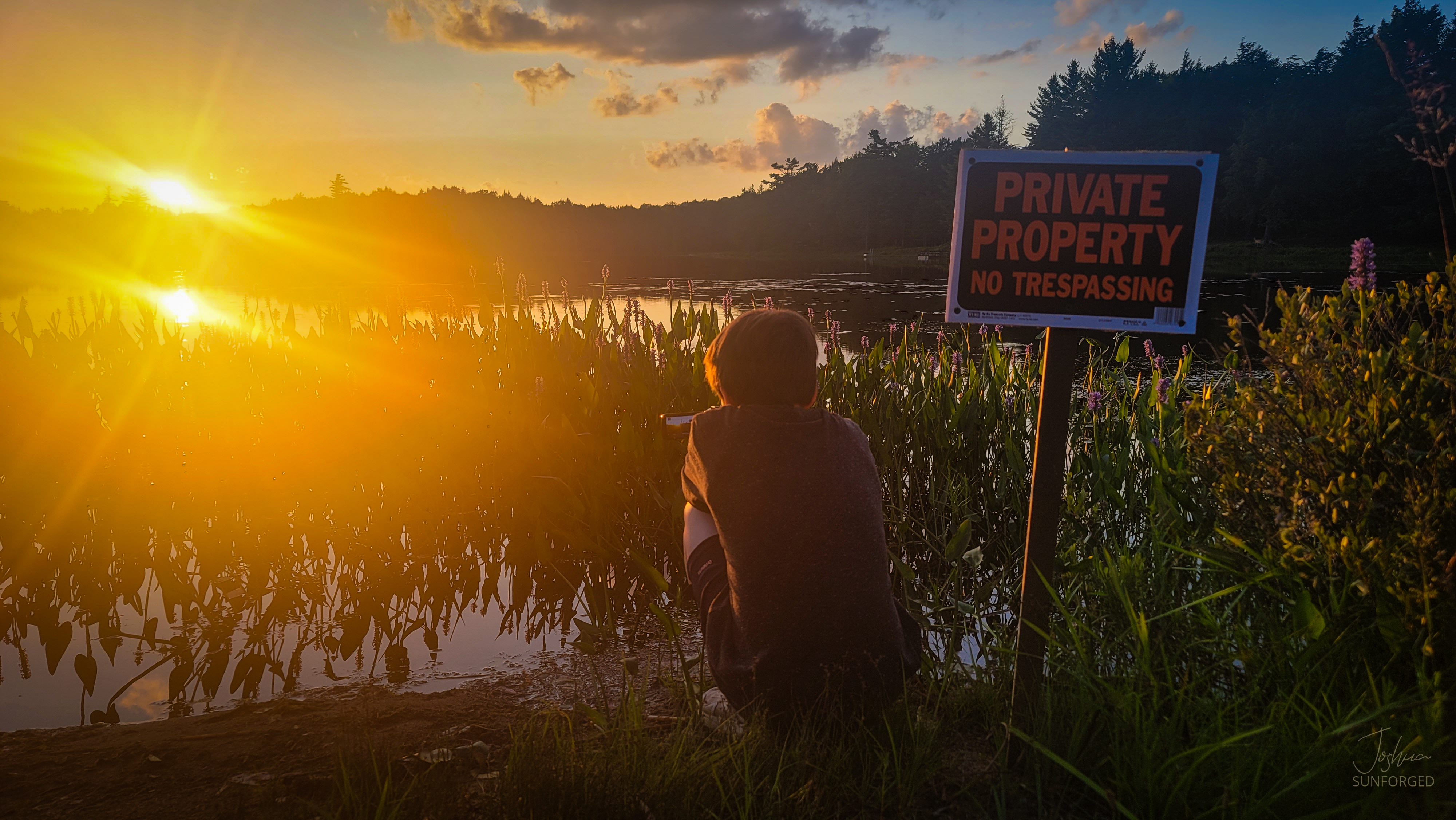
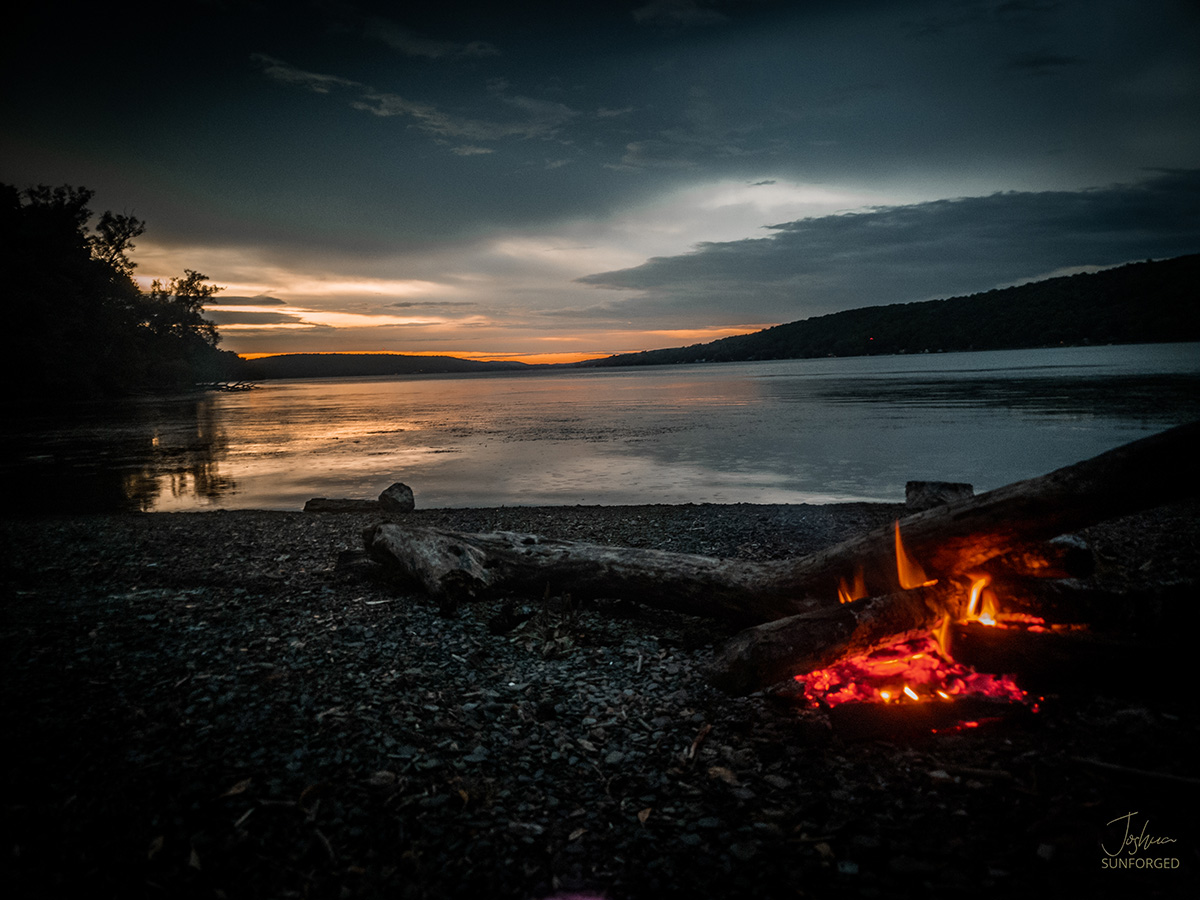
There is a specific quality to the light in the late afternoon just before the sun dips below the tree line. It doesn’t illuminate; it saturates. It turns ordinary leaves into stained glass and the dust in the air into something tangible.
This is the story of a two-hour hike where the only goal was to catch that fleeing light before the dark settled in. I started at the trailhead in Tully, where the shadows were already stretching long across the valley floor.
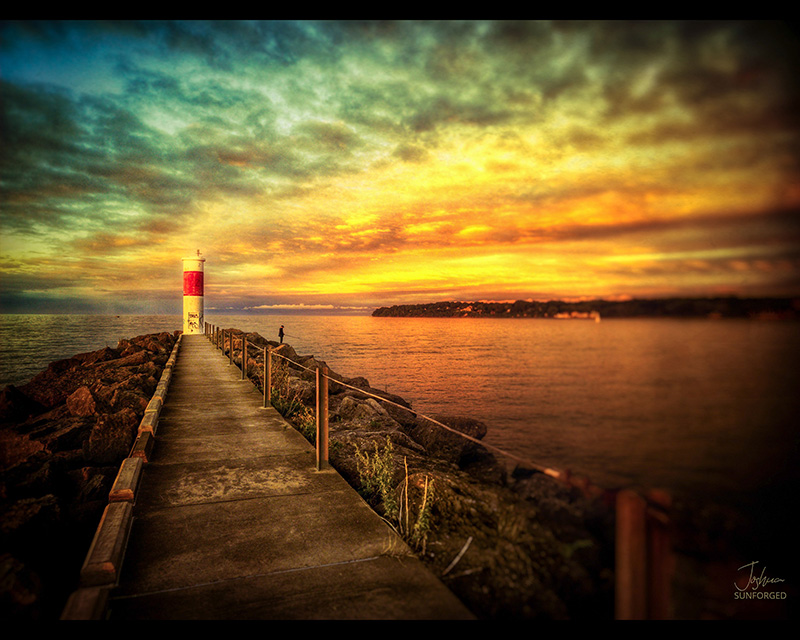
When you walk the same trails repeatedly, you stop looking for new things and start looking for new conditions. The path becomes familiar, but the weather and the angle of the sun provide endless permutations. On this particular evening, the air was still holding onto the humidity of the day, creating a hazy atmosphere that caught every beam of light. I found myself pausing every few hundred yards, watching how the light would catch a single fern or a patch of moss, turning the mundane into the miraculous.
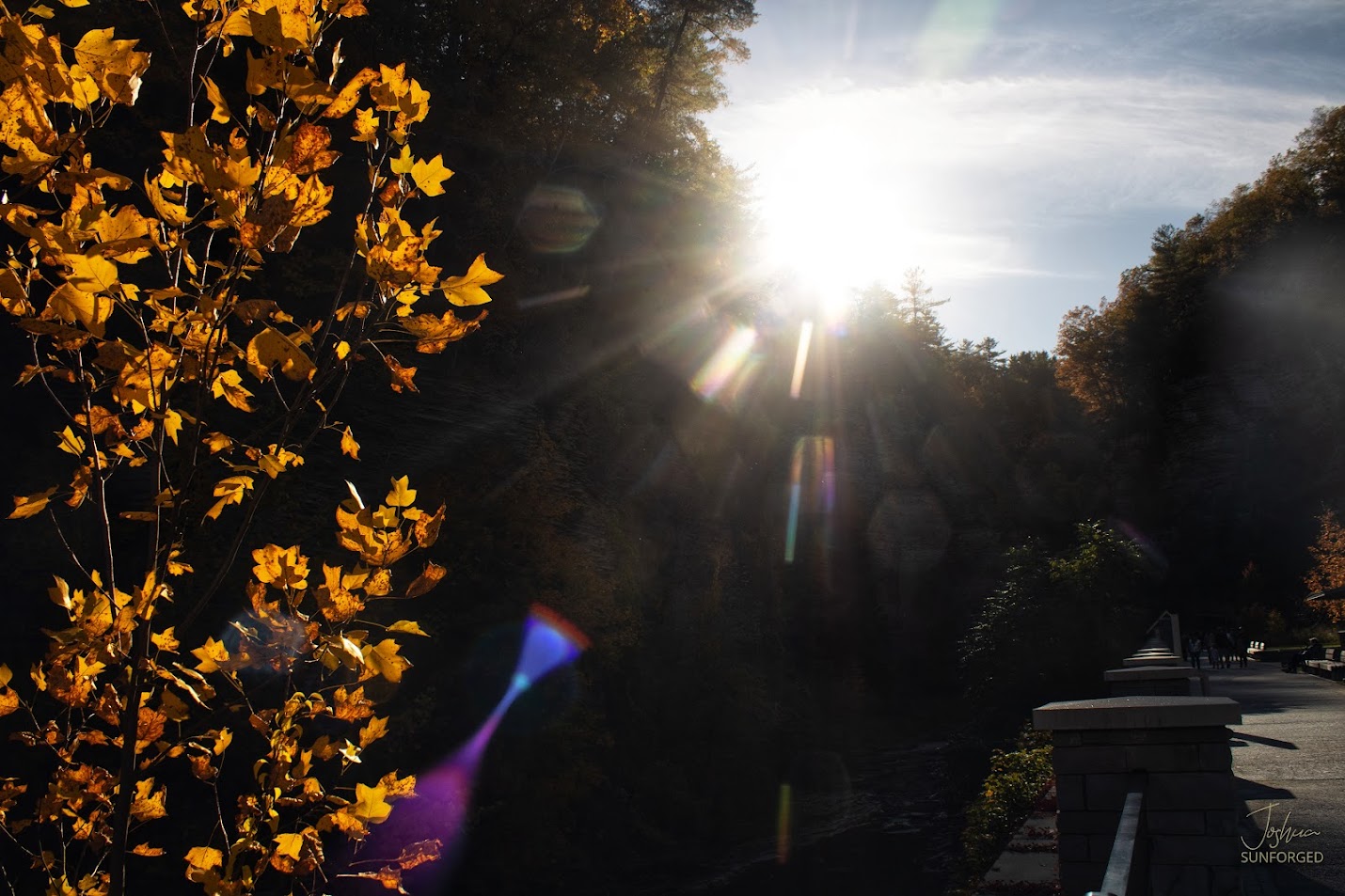
The Final Clearing
The instinct is always to hurry when you know the light is fading, to practically run toward the clearing. But landscape photography, at least the way I approach it, requires a forcing down of that urgency. You have to move at the speed of the environment, not the speed of the sun. If you rush, you miss the subtle gradients of the transition.
I arrived at the overlook with perhaps five minutes of true golden hour remaining. Everything was still. The air had cooled rapidly, and the only sound was the distant call of a red-tailed hawk circling the ridge. The majesty of discovering a view like this, completely alone, never diminishes. It is the silent reward for the climb.